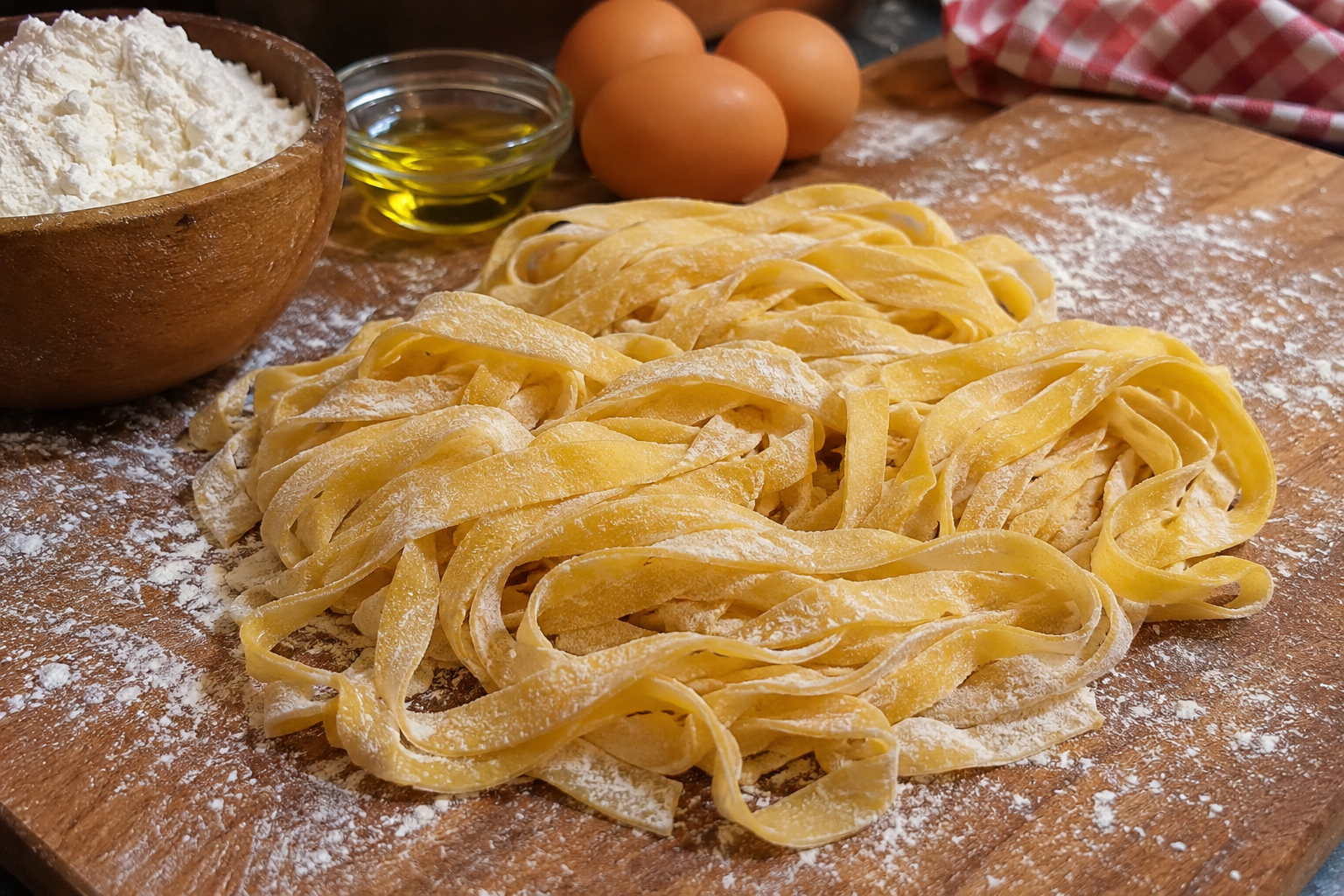
Homemade Pasta from Scratch: Easy Fresh Pasta Recipe
Making homemade pasta from scratch is easier than you might think. With flour, eggs, salt, and a little patience, you can prepare fresh pasta with a tender texture and a delicious homemade taste. You do not need a professional kitchen or an expensive pasta machine to get started.
This easy fresh pasta recipe is perfect for beginners. You can roll the dough by hand, cut it into fettuccine or tagliatelle, and serve it with your favorite sauce. Once you try making fresh pasta at home, you may find yourself reaching for this simple recipe whenever you want to make dinner feel special.

Why You’ll Love This Homemade Pasta Recipe
There are plenty of reasons to make fresh pasta at home:
- Simple ingredients: The basic dough uses flour, eggs, and salt.
- Beginner-friendly: You can prepare it with a rolling pin and a knife if you do not own a pasta machine.
- Flexible shapes: Make fettuccine, tagliatelle, lasagna sheets, or ravioli.
- Easy to customize: Try different flours or add spinach for colorful pasta.
- Great for family meals: Preparing and cutting the dough can be a fun kitchen activity.
The dough can also be prepared ahead of time, making it easier to plan a homemade pasta dinner.
Ingredients for Homemade Fresh Pasta
This recipe makes approximately four servings. For the best results, measure the flour carefully and use fresh eggs.
Main Ingredients
- 2 cups (250 g) all-purpose flour: Forms the structure of the pasta dough.
- 3 large eggs (about 150 g without shells): Add moisture, richness, and color.
- ½ teaspoon (3 g) fine sea salt: Adds flavor.
- 1 teaspoon (5 ml) olive oil (optional): Can make the dough a little easier to handle.
- 1–2 tablespoons (15–30 ml) water, if needed: Add gradually if the dough feels too dry.
- Extra flour or semolina: For dusting the work surface and preventing the pasta from sticking.
Optional Ingredients and Substitutions
You can adjust the flour depending on the texture you prefer.
- Italian 00 flour: A popular option for a smooth, delicate pasta dough.
- Semolina flour: Adds a firmer texture. Try replacing ½ cup (65 g) of the all-purpose flour with semolina and using 1½ cups (185 g) all-purpose flour.
- Whole wheat flour: Replace up to one-third of the all-purpose flour for a nuttier flavor. You may need a little extra moisture.
- Spinach: Add finely pureed, well-drained spinach to make green pasta. Adjust the flour if the mixture becomes too wet.
- Beetroot: A small amount of cooked beetroot puree can give the dough a natural pink color.
An egg-free pasta dough is also possible, but it requires a different flour-to-water ratio and preparation method. It is best treated as a separate recipe rather than a direct substitution.
Equipment Needed
You do not need special equipment to make fresh pasta. Gather these basic tools:
- Large mixing bowl or clean work surface
- Measuring cups and kitchen scale
- Fork
- Bench scraper or knife
- Rolling pin or pasta machine
- Sharp knife or pizza cutter
- Large pot
- Colander or pasta strainer
A pasta machine makes it easier to roll even sheets, but a rolling pin works perfectly well.
How to Make Homemade Pasta from Scratch
Follow these steps to prepare smooth, fresh pasta dough and turn it into your favorite pasta shape.
Preparation
Step 1: Prepare the flour
Place the flour on a clean countertop or in a large mixing bowl. If you are working directly on the counter, shape the flour into a mound and make a well in the center.
Add the eggs, salt, and optional olive oil to the well. Keep the sides of the flour mound high enough to help contain the eggs.
Step 2: Mix the ingredients
Use a fork to gently beat the eggs in the center of the flour. Gradually bring flour in from the sides until the mixture becomes thick.
Continue mixing until a rough dough begins to form. If the mixture looks dry and crumbly, add water a teaspoon at a time. Avoid adding too much at once.
Step 3: Knead the dough
Transfer the dough to a lightly floured work surface.
Push the dough away from you with the heel of your hand, fold it back toward yourself, and turn it slightly. Repeat this movement for approximately 8–10 minutes.
The dough should gradually become smooth, elastic, and slightly firm. If it sticks to your hands or the counter, sprinkle on a little flour. If it feels very dry, lightly dampen your hands and continue kneading.
Step 4: Let the dough rest
Shape the dough into a ball and wrap it tightly in plastic wrap or cover it with an overturned bowl.
Let it rest at room temperature for 30–45 minutes. Resting allows the flour to absorb moisture and the gluten to relax, making the dough easier to roll.
Rolling and Cutting
Step 5: Divide the dough
Unwrap the rested dough and place it on a lightly floured surface.
Cut it into four equal portions using a sharp knife or bench scraper. Keep the portions you are not using covered so they do not dry out.
Working with smaller pieces makes rolling easier, especially if you are using a rolling pin.
Step 6: Roll the dough
Flatten one portion with your hands.
If you are using a rolling pin, roll from the center outward. Turn the dough regularly to help maintain an even thickness. Continue rolling until the sheet is thin and almost translucent.
If you are using a pasta machine, begin with the widest setting. Pass the dough through the rollers, fold it into thirds, and repeat once or twice. Gradually reduce the thickness setting until you reach the consistency you want.
For fettuccine and tagliatelle, aim for a thin sheet approximately 1–2 mm thick.
Step 7: Cut the pasta
Lightly dust the pasta sheet with flour and fold it loosely into several layers.
Using a sharp knife, cut strips approximately:
- 6–8 mm wide for fettuccine
- 4–5 mm wide for tagliatelle
You can also use a pasta machine’s cutting attachment.
Carefully unfold the strips and separate them with your fingers. Toss them with a little flour or semolina to help prevent sticking.
For other pasta dishes, cut the sheets into squares for lasagna or use them to prepare ravioli.
Step 8: Arrange the pasta
Place the cut pasta into loose nests on a lightly floured baking sheet or clean kitchen towel.
Avoid stacking the strands without dusting them, as they can stick together. If you are not cooking immediately, follow the storage instructions below.
Cooking and Serving
Step 9: Boil the pasta
Bring a large pot of water to a rolling boil. Add approximately 1 tablespoon (15 g) of salt for every 4 quarts (3.8 liters) of water.
Carefully add the fresh pasta and stir gently during the first few seconds.
Fresh fettuccine or tagliatelle generally cooks in about 2–4 minutes, depending on its thickness. Taste a strand before draining. It should be tender but still have a slight bite.
Step 10: Combine with your favorite sauce
Drain the pasta, reserving approximately ½ cup (120 ml) of the cooking water.
Transfer the pasta directly into a pan containing your prepared sauce. Add a small splash of pasta water and toss gently until the pasta is coated.
The starchy water helps the sauce cling to the noodles and creates a smoother finish.
Step 11: Finish and serve
Serve immediately while the pasta is warm.
You can finish your homemade pasta with:
- Freshly grated Parmesan cheese
- Chopped fresh basil or parsley
- A drizzle of extra virgin olive oil
- Freshly ground black pepper
- A little lemon zest
Choose a sauce you enjoy and serve your fresh pasta straight away.
Recipe Card: Easy Fresh Homemade Pasta
Prep Time: 25 minutes
Rest Time: 30 minutes
Cook Time: 4 minutes
Total Time: 59 minutes
Servings: 4
Estimated Calories: Approximately 300 kcal per serving
Ingredients
- 2 cups (250 g) all-purpose flour
- 3 large eggs
- ½ teaspoon (3 g) salt
- 1 teaspoon (5 ml) olive oil, optional
- 1–2 tablespoons (15–30 ml) water, if needed
- Extra flour or semolina for dusting
Instructions
- Place the flour on a clean surface or in a bowl and make a well in the center.
- Add the eggs, salt, and optional olive oil.
- Gradually mix in the flour until a rough dough forms.
- Knead for 8–10 minutes until smooth and elastic.
- Cover and rest for 30 minutes.
- Divide the dough into four portions.
- Roll each portion into a thin sheet using a rolling pin or pasta machine.
- Cut into fettuccine, tagliatelle, or your preferred shape.
- Boil in salted water for approximately 2–4 minutes, checking for doneness.
- Drain, toss with your favorite sauce, and serve immediately.
Recipe Note: The calorie figure is an estimate for plain pasta and should be checked with a nutrition calculator using the exact ingredients and serving weights. Sauce, cheese, and toppings are not included.
Tips for Perfect Homemade Pasta
A few small details can make a big difference when preparing fresh pasta.
- Measure the flour by weight: A kitchen scale gives you a more consistent measurement than cups alone.
- Choose your flour carefully: All-purpose flour is a convenient starting point. Italian 00 flour is another option for a smooth dough.
- Do not rush kneading: Work the dough until it becomes smooth and elastic.
- Allow enough resting time: Resting makes the dough easier to roll and helps prevent it from shrinking back.
- Keep unused dough covered: Exposure to air can dry the surface and make rolling difficult.
- Use flour sparingly: Too much extra flour can make the pasta dry.
- Cook in small batches: This helps prevent the strands from clumping together.
Common Mistakes to Avoid
1. The dough is too sticky
If the dough sticks to your hands and work surface, add a small amount of flour and knead again. Add it gradually rather than using a large amount at once.
2. The dough is too dry
If the dough cracks or refuses to come together, it may need more moisture. Add water a teaspoon at a time until it becomes cohesive.
3. Skipping the resting period
Freshly kneaded dough can be difficult to roll. Cover it and let it rest for at least 30 minutes before shaping.
4. Rolling the pasta too thick
Thick pasta can feel heavy and may need longer to cook. Roll the sheets evenly and adjust the thickness to suit the shape you are making.
5. Overcooking fresh pasta
Fresh pasta cooks much faster than dried pasta. Start checking it after about 2 minutes and taste a strand before draining.
Storage and Reheating Tips
Fresh pasta is best enjoyed immediately, but you can prepare it ahead of time.
Refrigerating uncooked pasta
- Arrange the pasta in loose nests.
- Dust lightly with flour or semolina.
- Place in an airtight container.
- Refrigerate for up to 2 days for best quality.
Freezing uncooked pasta
- Arrange the pasta nests on a baking sheet.
- Freeze until firm, usually around 1–2 hours.
- Transfer to a freezer-safe container or bag.
- Store for up to 2 months for best quality.
You can cook frozen fresh pasta directly from the freezer without thawing. Add it to boiling salted water and allow a little extra cooking time, checking frequently.
Reheating cooked pasta
For the best texture, reheat leftover pasta in a skillet with a splash of water or sauce over medium-low heat. Stir gently until heated throughout.
You can also use a microwave-safe dish with a little water or sauce to prevent the pasta from drying out. Refrigerate cooked leftovers promptly and use within 3–4 days.
Nutrition and Easy Pasta Variations
Fresh egg pasta provides carbohydrates, along with protein and fat from the eggs. The exact nutritional values depend on the flour, egg size, portion size, and any additional ingredients.
The following variations let you change the color and texture of the dough.
Spinach Fresh Pasta
Add finely pureed, well-drained spinach to the eggs before mixing. The spinach gives the dough a green color and a mild vegetable flavor. Adjust the flour if the added moisture makes the dough too soft.
Beetroot Pasta
Mix a small amount of cooked and pureed beetroot into the egg mixture. This creates naturally pink pasta that pairs nicely with a simple butter sauce or a light cream sauce.
Whole Wheat Pasta
Replace up to one-third of the all-purpose flour with whole wheat flour. This gives the pasta a nuttier flavor and a slightly firmer texture.
Homemade Ravioli
Roll the dough into thin sheets and cut them into squares. Add a small amount of filling, such as ricotta or spinach, then seal the edges carefully before cooking.
Best Sauces to Serve with Fresh Pasta
Homemade pasta works with many different sauces. Here are a few combinations to try:
- Classic tomato sauce: Tomatoes, garlic, olive oil, and fresh basil.
- Creamy Alfredo sauce: Butter, cream, Parmesan cheese, and black pepper.
- Pesto sauce: Fresh basil, garlic, Parmesan, pine nuts, and olive oil.
- Garlic butter sauce: Butter, minced garlic, parsley, and a little lemon juice.
- Bolognese sauce: A rich tomato and meat sauce that pairs especially well with fresh tagliatelle.
For a quick dinner, toss your pasta with garlic butter and Parmesan. If you have more time, serve it with a slow-cooked Bolognese sauce.
Frequently Asked Questions
1. Is making homemade pasta from scratch difficult?
No. The process involves mixing flour and eggs, kneading the dough, letting it rest, and rolling it into sheets. With a little practice, beginners can make fresh pasta at home.
2. Can I make fresh pasta without a pasta machine?
Yes. A rolling pin and a sharp knife are enough. Roll the dough as evenly and thinly as possible before cutting it into your preferred shape.
3. What is the best flour for homemade pasta?
All-purpose flour is a convenient choice for beginners. Italian 00 flour is another popular option for a smooth, delicate dough. You can also combine all-purpose flour with semolina for a firmer texture.
4. How long should fresh pasta cook?
Fresh egg pasta usually takes approximately 2–4 minutes in boiling salted water. The exact time depends on the thickness and shape, so taste a strand before draining.
5. Can I make pasta dough ahead of time?
Yes. Wrap the dough tightly and refrigerate it for up to 24 hours. If it feels firm after refrigeration, let it sit briefly at room temperature before rolling.
6. Why is my homemade pasta dough too sticky?
Sticky dough usually means there is too much moisture compared with the flour. Add a little flour and continue kneading until the dough becomes smooth and manageable. Avoid adding too much flour, which can make the pasta tough.
7. Can I freeze homemade fresh pasta?
Yes. Arrange the cut pasta into small nests, freeze them on a baking sheet until firm, and transfer them to a freezer-safe container. For best quality, use within approximately 2 months. You can cook it directly from frozen.
8. Is homemade pasta healthier than store-bought pasta?
Neither option is automatically healthier. Homemade egg pasta contains eggs, while dried pasta often has a simpler ingredient list. The nutritional difference depends on the recipe, portion size, and sauce.
Conclusion
Making homemade pasta from scratch is a rewarding way to turn a few everyday ingredients into a delicious meal. With flour, eggs, salt, and a little patience, you can prepare fresh pasta without professional equipment.
Start with simple fettuccine or tagliatelle, then experiment with different shapes, flours, and sauces as you gain confidence.
Have you tried making fresh pasta at home? Leave a comment and tell us which pasta shape and sauce you enjoy most. If you make this recipe, remember to rate it and share it with someone who loves homemade Italian food!
Homemade Pasta
Ingredients
Method
- On a clean surface, mound the flour and make a well in the center.
- Crack the eggs into the well and sprinkle salt on top.
- Using a fork, gradually incorporate the flour into the eggs until combined.
- Knead the dough for about 10 minutes until it becomes smooth and elastic.
- Wrap the dough in plastic wrap and let it rest for at least 30 minutes.
- Divide the rested dough into four pieces.
- Using a rolling pin or pasta machine, roll out each piece as thin as desired.
- Cut the rolled dough into your preferred pasta shape (e.g., fettuccine, lasagna).
- Bring a large pot of salted water to a boil.
- Add the pasta and cook for 2-4 minutes, or until al dente.
- Drain and serve with your favorite sauce.